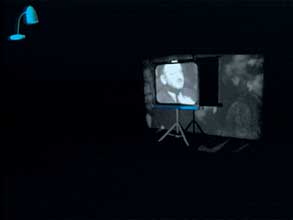
In Interactive art the ideal is to create possibilities for encounter. The mediating space that every interactive work has, provides the active viewers with the opportunity to form and define their own role. The promise of the art form is that the interactors themselves can determine the content of the work, they are able to intervene and to direct. The first question is therefore if the interface really meets that freedom, or whether the interface is dependent on the guidance and control by the designer, in order to fully achieve the potential richness of the available material. The relative newness of the interactive media converts interface designers into educators and dialogue experts. We, as early users, need to be trained to make use of the potential freedom of these media. This transforms the study of interactivity into a study of media archaeology. How did we consider delivery and involvement in the realization of the older media? How was interactivity dealt with in the media? Or did it actually exist? Did the ‘senders’ who used the media perhaps not want anything to do with the direct reception of what they transmitted, or were they quite satisfied with the passive nature of that perception? How individually did the old media address their audiences as a potential component of a piece? If there was a need for communication, how was that dealt with? In his work, Hoberman is critical about the high expectations of new media, and not without realizing how the media and the use thereof will gradually evolve. This work too finds its origins in this media archaeological questioning. On the ruins of the old media, a new mixed form arises in which old media are still present, but are transformed into new methods of presenting and involving. Click, and you see a black decor in which there is an old 8mm projector shining its light beam onto a screen. Click again and the film begins. And so you get to see material from Hoberman's personal archives shown by various projectors from the good old days. A baby in a bath, fragments of special family events, a day out to the swimming pool and so on. The material is not earth shattering in itself, but the manner in which it is presented is that all the more so. With every choice that you make, you feel how delicate the light beam that shines from the projector is, and how easily is can be manipulated and altered. How the context of the presentation can lift the contents of the images out of their background and meaning. This makes this more of an interesting study into the position of the viewers and how the projected light can reach them, than an independent work of art. It calls to mind a memory of something that has never been.
– Willem van Weelden
|
Production Zentrum für Kunst- und Medientechnolgie Karlsruhe / Artintact 3
|
|
 1 9 9 7